

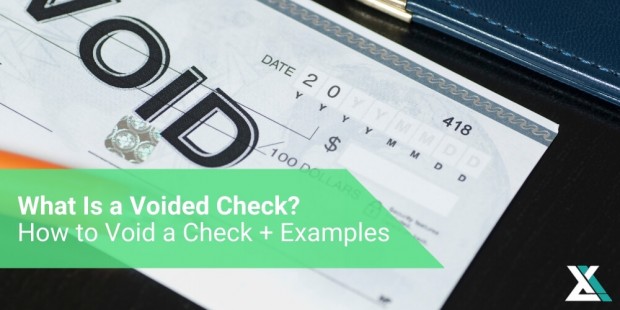
Voided check guide
What is a voided check?
A voided check is a check with “VOID” written across the front to show it should not be accepted for payment. Employers, billers, and funding providers use it to get your bank details without receiving a usable check.
The account holder’s name, bank name, routing number, and account number stay readable. Those details let the recipient set up a deposit or payment, so treat a voided check as carefully as other banking documents.
How to write a void check, step by step
Leave the payee, amount, and signature blank. The recipient needs the account details printed on the check, not a payment.
- Take an unused check from the right account. For business funding, use the business account your provider asks you to verify.
- Write VOID across the front. Use large, clear letters in blue or black ink. Do not use pencil.
- Keep the bank details readable. Avoid covering the account holder’s name or the routing and account numbers along the bottom.
- Leave the signature blank. Do not sign the back either.
- Record the check number. Mark it void in your check register so you know why that number was skipped.
- Use the recipient’s secure upload portal. Verify the upload link before using it. If the recipient accepts a copy, photograph or scan the whole check so every detail is clear.
Take an unused check from the account you want to use.
Use blue or black ink across the front. Leave the signature blank.
Account holder, bank, routing number, and account number.
Use a verified secure upload link. Record the check as void.
Common mistakes when voiding a check
A voided check needs to be easy to read and clearly marked. Avoid covering the account numbers with a thick marker, signing the check, or sending a photo that cuts off the bottom edge. If the bank details are blurred or hidden, the recipient may ask you to send another copy.
Use a check from the account you actually want to use. An old checkbook can still look valid even after you have closed or changed the account. Before sending it, compare the printed details with your current bank records. If they don’t match, ask your bank for an updated document.
For the basic marking steps, see Chase’s instructions for voiding a check. The recipient can tell you whether it needs the original, a scan, or a photo.
Voided check example
Write VOID across the payment area, as shown below, without covering the bank details. Check layouts vary. Follow the labels on your check, and ask your bank if you’re unsure which number is which.
123 Example StreetSAMPLE BANK
Check 0000
ACCOUNT: XXXXXXXXXXXX
What information is on a voided check?
The example above uses placeholders, but a real voided check identifies both the account and the bank. These details have different jobs:
| Detail | What it tells the recipient | What to check |
|---|---|---|
| Account holder’s name | Who the account belongs to | Use the name shown in the bank’s records. Explain a business-name mismatch before submitting. |
| Bank name | Which institution holds the account | Make sure the check is from your current bank. |
| Routing number | Which bank routing information to use | Confirm the correct number for the requested transfer type with your bank. |
| Account number | Which account should receive the deposit or be used for authorized payments | Keep every digit readable, including any leading zeros. |
| Check number | Which paper check you marked void | Record it in your check register; do not confuse it with the account number. |
The position of these numbers can vary by check design. If you’re being asked for wire instructions, confirm them with your bank instead of assuming the routing details printed on a check are sufficient.
How to get a voided check
If you have a checkbook, you can make a voided check yourself using the steps above. If you don’t, ask the organization requesting it which alternatives it accepts.
If you have online banking
Check your bank’s app or website for a direct deposit form, account details document, or bank-issued voided check. Banks use different names for these documents, and some don’t offer them online. Confirm what the recipient accepts before sending a screenshot of your balance.
If you do not have a checkbook
Ask your bank for a counter check or an account verification letter. Before ordering one, check the fee and make sure the recipient accepts it. Ask which details the letter must include, such as your account name, routing number, and account number.
If someone suggests a deposit slip
Get the recipient’s approval first. A deposit slip may use different routing information or leave out details needed for electronic payments. You can’t assume its numbers will work in place of the ones on a check.
Look for a direct deposit form or bank-issued account document.
Ask about a counter check or account verification letter.
Confirm which alternatives it accepts before sending anything.
Ask what details must appear and whether your bank charges a fee.
How to get a voided check online
Start inside your bank’s official website or app. Select the account you want to use, then look for direct deposit, account services, or account documents. A downloadable direct deposit form may solve the problem even if the bank does not provide an image labeled “voided check.”
For example, Chase offers a prefilled direct deposit form through online and mobile banking. That is a bank-provided form, not a promise that every employer or funding provider will accept it instead of a voided check. Ask the recipient before sending it.
If you can’t find a suitable document, contact your bank. Tell them who is requesting the check and ask what account-verification document they can provide. You do not need to enter your account details into an unfamiliar check generator to find out your options.
Voided check vs. direct deposit form vs. bank letter
| Document | What it provides | Before you send it |
|---|---|---|
| Voided check | Printed account details on a check marked VOID | Confirm whether a copy is acceptable. |
| Direct deposit form | Account information used to arrange deposits | Ask whether the bank-issued form meets the recipient’s requirements. |
| Bank verification letter | Account information confirmed in a letter from the bank | Ask which details and date the recipient requires. |
| Counter check | A check your bank may be able to provide without a full checkbook | Check fees, printed details, and acceptance before requesting one. |
Why do people void checks?
You might need a voided check when setting up payroll, arranging automatic bill payments, or getting business funding. You should also void a check you’ve filled out incorrectly, as long as you still have it.
Give payroll the details needed to send wages to your account.
Supply account details alongside a separate payment authorization.
Help the provider identify the account that should receive funds.
Mark an incorrect check void and use a fresh check instead.
Read any direct deposit form, loan agreement, or debit authorization that comes with the request. A voided check supplies account details; it does not replace those documents.
How to void a check for direct deposit
To void a check for direct deposit, take an unused check from the account where you want your pay deposited. Write VOID in large letters across the front, keep the routing and account numbers readable, and leave the signature blank.
- Check that the account belongs to you and is the one you want payroll to use.
- Write VOID in blue or black ink before taking a photo or making a copy.
- Complete your employer’s direct deposit form. Check the account details against the check.
- Submit the form and voided check through the employer’s verified process, then confirm when direct deposit will begin.
If you don’t have paper checks, ask payroll whether it accepts a bank-issued direct deposit form or account verification letter. See the ways to get a voided check without a checkbook above.
An employer may ask for a voided check with your payroll enrollment form to help enter your account details correctly. The check gives payroll a reference for where your wages should go. If you’re a freelancer, a client may request similar information to arrange electronic payments.
Confirm the account you want to receive the money, complete the employer’s required form, and ask when the change will take effect. Sending a voided check does not mean the next paycheck will automatically arrive by direct deposit. Check your payroll information and bank account to confirm the setup.
Voided checks for automatic payments and ACH
A biller may request a voided check to record the bank details for automatic payments. Read the separate authorization before agreeing, especially the payment amount, timing, and cancellation instructions. The check identifies the account; the authorization explains the payments you are allowing.
Business owners may also see ACH discussed in financing agreements. Our guide to ACH business financing and repayments explains that funding context. Review your own agreement for the repayment schedule and account requirements.
For personal accounts, the Consumer Financial Protection Bureau explains how to stop automatic payments, including contacting the company and your bank. Stopping an automatic debit does not erase an amount you owe. Business-account procedures and protections can differ, so ask your bank about your account.
Voiding a check after a writing mistake
If you enter the wrong payee or amount and still have the check, mark it VOID and start with a new one. Record the voided check number so the gap makes sense when you review your records. If you no longer need the incorrect check as a record, dispose of it securely.
What is the risk of sending a check without voiding it?
A blank or partly completed check could be mistaken for a payment. Someone could also fill in the missing details and try to use it, especially if you’ve already signed it. When you’re sending a check only to share banking details, write VOID on it first.
VOID tells the recipient the check is not for payment. It doesn’t hide your account number or make fraud impossible. Share a voided check only with someone you trust, through a secure channel you’ve verified.
Write VOID before photographing or scanning the check.
Confirm unexpected requests through a known phone number or contact.
Prefer the recipient’s verified upload portal over ordinary email or text.
Store it securely. Shred paper copies you no longer need.
What if you already sent the check?
Contact your bank promptly if you’ve sent an unvoided check, lost one, or suspect someone is misusing it. Ask whether you can stop payment and what else you should do to protect the account. Writing VOID on your copy won’t cancel the check someone else has.
Cancelled check vs. voided check: what’s the difference?
A cancelled check, also spelled canceled check, generally means a check the bank has already processed and paid. A voided check is marked VOID so it should not be used for payment. The terms describe different things, even though people sometimes use “cancelled” when they mean “voided.”
A paid check image can serve as proof of payment. You can usually look for it in your online banking transaction history or ask your bank for a copy. See Chase’s explanation of canceled checks for more on payment records.
If an employer asks for a cancelled check to set up direct deposit, clarify whether they want an unused check marked VOID or another account document. Don’t assume a record of an old payment meets their requirements.
A stop-payment request is different again: it asks your bank to prevent a payment before the check clears. Writing VOID on a copy does not reverse a payment that has already been processed.
Why do funding providers ask for a voided business check?
When you’re getting business funding, a voided check helps us confirm where to deposit the money. We compare the account details with your business information to reduce the risk of sending funds to the wrong account.
The check is one part of account verification. On its own, it doesn’t prove the account is real, open, or controlled by the applicant. A provider may also check bank statements, request a bank letter, or use a secure account connection.
If your repayments will be collected electronically, read the separate payment authorization. Sending a voided check does not mean you’ve agreed to a repayment schedule. Explore our small business funding options or ask which account documents your funding provider accepts.
Which business account should you provide?
Use the account your funding provider asks you to verify. If the check shows a trade name while your application uses the legal business name, explain the difference before submitting it. Ask what supporting document the provider needs rather than editing the check image to make the names match.
Document requirements depend on the product and provider. Our guides to business term loans and business lines of credit explain those funding options. A voided check helps with deposit instructions, but it does not replace the rest of the application or guarantee approval.
How do I get a voided check?
Select the situation that fits you. Follow the steps, then use the checklist before sending your document.
I have an unused paper check
- Confirm it belongs to the account the recipient needs.
- Write VOID across the front in blue or black ink.
- Keep the account name and banking numbers readable. Do not sign.
- Record the check number as void and use the verified upload process.
I have online banking but no paper checks
- Look for a direct deposit form or bank-issued voided check in your bank’s app.
- Ask the recipient whether it accepts that document.
- If it does not, ask your bank about a counter check or account verification letter.
I need this for business funding
- Use the business account your funding provider asks you to verify.
- Check that the business or account name matches the application, or explain any difference.
- Ask which bank-issued alternatives are accepted if you do not have checks.
- Send the document using your provider’s verified secure process.
I already sent an unvoided check or lost it
Contact your bank promptly and explain what happened. Ask about a stop payment and account protection. Marking a different copy VOID will not stop the original check.
Ready-to-send checklist
This helper walks you through the process. It does not create a bank-issued check or verify your account. It collects no banking details, and your checklist selections are not submitted.
Frequently asked questions
Can I get a voided check online?
Some banks let you download a voided check or direct deposit document from their app or website. Ask the recipient whether it accepts that document before you send it.
Can I make my own voided check with an online generator?
A recipient may reject a homemade check image because it wasn’t issued by your bank. Ask your bank for a document the recipient accepts. The example on this page is an illustration, so don’t submit it as a real check.
Do I sign a voided check?
No. When you void an unused check to share your account details, leave both the signature line and the back unsigned.
Is a cancelled check the same as a voided check?
No. A cancelled check (also spelled canceled check) generally means the bank has already processed and paid it. A voided check is marked VOID so it should not be used for payment. If someone requests a cancelled check for account verification, ask which document they mean.
Does writing VOID stop a payment?
Writing VOID on paper does not tell your bank to stop a payment. If you’ve already issued the check or can’t find it, contact your bank.
Can I email a voided check?
Ask for a secure upload link first, and verify who is requesting the check. Your banking details are still visible, so don’t send it in response to an unverified email or text.
Can I use a photo of a voided check?
Ask the recipient whether it accepts photos. If it does, use a clear image of the entire check with VOID and the banking details readable. Avoid glare, blur, or cropped edges, and send it through the verified upload method.
Can I get a voided check without a checking account?
A voided check must correspond to an account. If you do not have an account that provides checks, ask the recipient which account types and alternative documents it accepts. Do not create a sample check and present it as a bank-issued document.
Can I use the same voided check more than once?
A recipient may accept a copy you already have if the account details are still current. Confirm its requirements each time. Store the copy securely, and replace it if the account information changes.
Does a voided check expire?
The useful question is whether the account details are still correct and the recipient accepts the document’s age. A check from a closed account or one showing outdated information is not suitable. Ask whether a recent bank letter or fresh copy is required.
Can I use a starter check or counter check?
Possibly, if your bank offers one and the recipient accepts it. Ask whether it includes the account holder’s name and all required banking details. Confirm the cost before requesting it.
Is a voided check the same as a blank check?
No. A blank check has not been filled out or marked void. A voided check has VOID written on it so it should not be accepted for payment. When someone requests a voided check for account details, do not send a signed blank check.
Getting your business ready for funding?
Ask your funding provider which account documents it needs, and have them ready before you apply. Check your funding options with Excel Capital to find out what may fit your business.

